
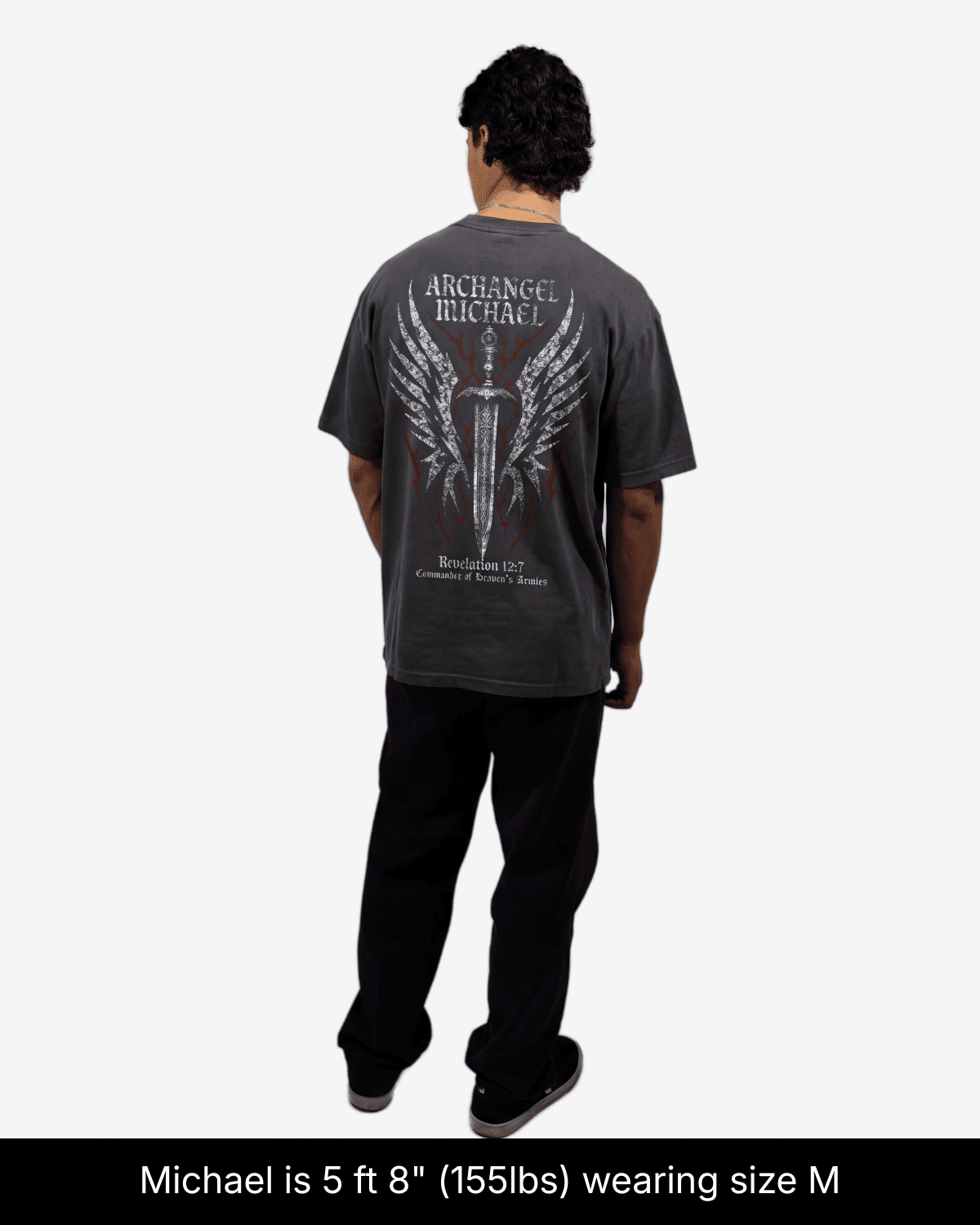
Archangel Michael in the Bible: Meaning, Verses and Symbolism
Archangel Michael appears in some of the Bible’s most dramatic passages: conflict in the spiritual realm, protection during trouble, and war in heaven. Those scenes have inspired centuries of Christian art, from paintings and stained glass to modern apparel.
But popular imagery can easily become mixed with details that Scripture never states. A careful reading begins by separating the biblical text from later tradition.
In the Bible, Michael is powerful—but never independent. His courage and authority remain under God.
Who is Archangel Michael in the Bible?
Michael is a named angelic figure associated with spiritual conflict and protection. He appears by name in Daniel, Jude, and Revelation. Jude 9 directly calls him “the archangel.”
The Bible gives only a focused picture of Michael. It does not provide a full biography, describe his appearance in detail, or make him the center of the story. Each passage directs attention toward God’s authority and the larger conflict in which Michael serves.
Where is Michael mentioned in the Bible?
Daniel 10:13: “one of the chief princes”
Daniel 10 describes a messenger delayed amid spiritual conflict until Michael, identified as one of the chief princes, comes to help. The passage gives a glimpse of conflict beyond what Daniel can see, while keeping many details unexplained.
Michael’s appearance communicates assistance and strength within a mission directed by God. The text does not portray him acting for personal glory.
Daniel 10:21: Michael connected with God’s people
Later in the same chapter, Michael is described in connection with Daniel’s people. Translations word the relationship differently, but the protective association is clear.
Daniel 12:1: protection in a time of trouble
Daniel 12 looks toward an intense time of trouble and says Michael will arise. The passage connects him again with protection, while deliverance ultimately belongs to God and His plan.
Jude 9: authority with humility
Jude 9 identifies Michael as the archangel and describes a dispute with the devil over the body of Moses. One of the passage’s most important details is restraint: Michael does not rely on arrogant speech, but appeals to the Lord’s rebuke.
This makes Michael a striking symbol of strength under authority. Biblical courage is not the same as self-exaltation.
Revelation 12:7–9: war in heaven
Revelation presents Michael and his angels fighting the dragon and its angels. The dragon is identified in the passage with the ancient serpent, the devil, and Satan.
Revelation is apocalyptic literature, filled with imagery that Christians interpret in different ways. The central point is clearer than every detail: evil does not have final authority. Michael participates in the conflict as a servant within God’s victory.
What does the name Michael mean?
Michael’s name is traditionally understood to mean “Who is like God?” The question points away from Michael and toward God’s uniqueness. That meaning fits the biblical picture: Michael may be a mighty warrior, but he is not divine and does not replace the One he serves.
What does Archangel Michael symbolize?
Christian art commonly uses Michael to represent several connected ideas:
- Courage: standing firm in the presence of real opposition.
- Protection: serving in passages connected with God’s people during conflict.
- Spiritual warfare: the reality that the visible world is not the whole story.
- Humility under authority: strength that does not claim God’s place.
- Hope in God’s victory: evil is fearsome, but it is not ultimate.
Swords, shields, armor, wings, and a defeated dragon are visual symbols used to communicate these themes. Not every artistic detail comes directly from a verse, so the artwork should lead viewers back to Scripture rather than become a substitute for it.
Michael’s example: courage without pride
Modern culture often presents strength as total independence: trust yourself, answer to nobody, and overpower whatever stands in the way. Michael’s biblical image is different. His strength is exercised within God’s order.
That distinction matters in everyday life. Courage can mean telling the truth without cruelty, protecting someone without seeking praise, resisting temptation without pretending to be invulnerable, or asking for help instead of hiding behind pride.
Biblical text and later tradition
Many stories, feast-day traditions, prayers, and artistic conventions about Michael developed across different Christian communities. Those traditions are not identical, and they should not be presented as if every detail appears directly in Scripture.
A reliable approach is to begin with Daniel 10 and 12, Jude 9, and Revelation 12. Then, when exploring a tradition or artwork, ask which details come from the biblical passage and which reflect later interpretation.
Frequently asked questions
Is Michael actually called an archangel in the Bible?
Yes. Jude 9 directly refers to Michael as the archangel. The word “archangel” also appears in 1 Thessalonians 4:16, although Michael is not named in that verse.
Is Michael the only angel called an archangel by name?
In the commonly recognized Protestant canon, Michael is the only named figure directly given the title “archangel.” Gabriel is named in Daniel and Luke, but those passages do not use that title for him.
Does the Bible say what Michael looks like?
No detailed physical description of Michael is given. Wings, armor, shields, and a sword are meaningful artistic symbols, but viewers should not confuse an artist’s visual language with a complete biblical portrait.
What is the main lesson from Michael’s story?
Michael’s passages point to courage, protection, spiritual conflict, and power submitted to God. The focus should remain on God’s authority rather than on treating an angel as the source of victory.
Wear the symbol with its meaning intact
Archangel Michael imagery can be visually powerful. Its deeper meaning is not domination or fear—it is courage under authority and hope that evil will not have the final word.
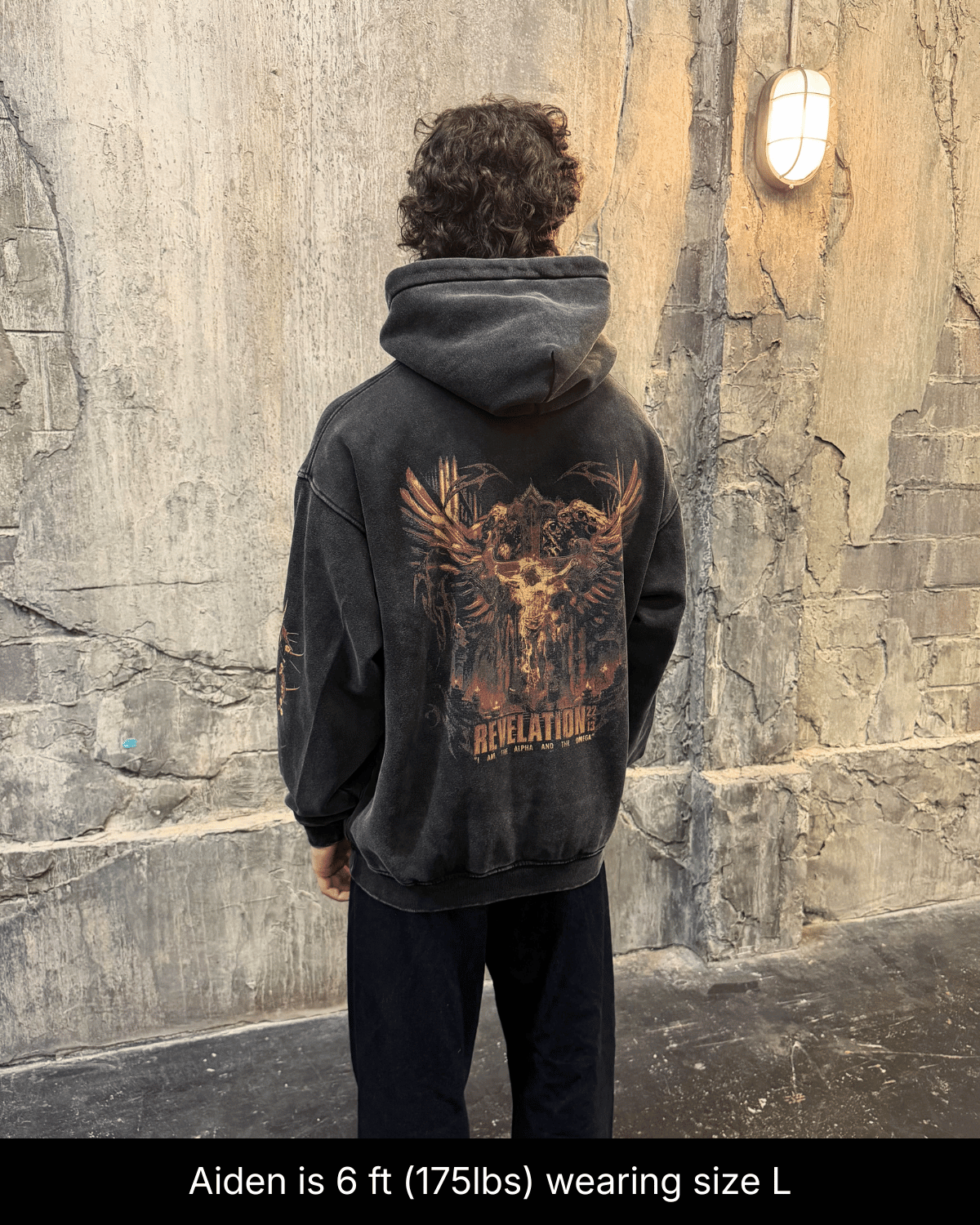
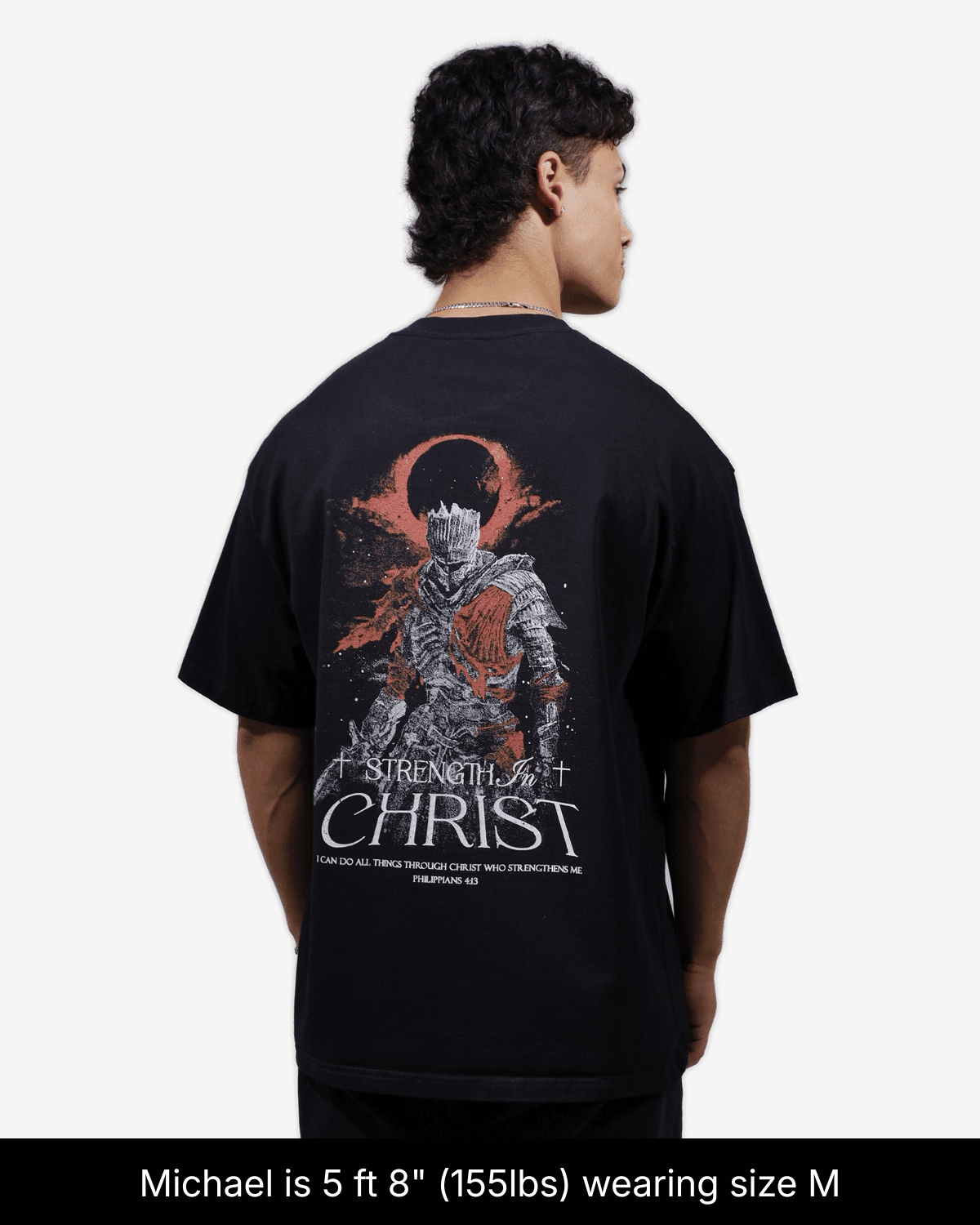
Explore the Archangel Michael hoodie, the dark grey wash shirt, or the light grey wash shirt. For more background on Christian imagery, read our guide to common symbols in Jesus-inspired apparel.

Leave a comment
This site is protected by hCaptcha and the hCaptcha Privacy Policy and Terms of Service apply.